A Big Zin and No Win
It is Sunday night, and I am in despair. I’m a big San Francisco 49er fan. The game was intense; and, in the end, well you know. They lost by three points. It was close and, to make it through, I had a little refreshment along the way.
It was a 2009 Turley Zinfandel from the Cedarman Vineyard. I will stick my neck out here and say that Turley is one of the best Zinfandel producers in California. I will also say that I am not sticking my neck out very far by saying that. Turley predominately makes single vineyard wines and is prolific in their production.
Cheers — to Your Health!
This week, I’d like to share some information about the health benefits of wine. But, first, let me start with a disclaimer. I’m not a doctor, so this isn’t health or medical advice. Also, I don’t play a doctor on TV, nor did I sleep in a Holiday Inn last night! Yet, I’m very interested and get quite excited when I hear that things or practices I enjoy are good for my health. Just yesterday, I was reading a presentation on Medscape, the title being “Coffee, the First Wonder Drug.” I get very jazzed when I see that type of a title and the data is there to support the claim from a reliable source. The same is true for my passion about wine.
It’s alcohol, and how can that be good? We all know that moderation is an important aspect of all things we do, and there have been many studies that have concluded that low to moderate consumption of alcohol is associated with numerous potential physiological benefits. I once sat in on a cardiologist presentation (back in the ‘80’s) on the benefits of red wine as contrasted to white wine, beer, and hard liquor versus no consumption at all. To be honest, I was not drinking at all prior to that evening. Thank you, doctor. Look at what I might have missed!
“Taint” What It Should Be!
Dining out with great friends and with a great bottle of wine is one of the pleasures in life. In a nice restaurant, there is a process, once you have selected a wine from the list (or brought one from home), of serving the wine. The server will present the bottle to allow you to confirm that it is what you ordered and then open the bottle.
Storing Wine Over the Refrigerator or Stove? Oh, No!
All of us have specific preferences for temperature and sunlight. I have mine: It’s a temperature of above 60 degrees with an ample amount of blue sky and not too much moisture (rain, that is). (Hmmm, that sounds like a good argument for living in California…) I discovered my preference while living in the frozen tundra of Minneapolis for several years!
My point is that, just like people have preferences for their “ideal climate,” wine also has its “ideal climate.” If you’ve visited wineries, toured their facilities, and walked through the caves, you can see that the winery is built for temperature control, even if electricity is lost. You’ve likely heard the number “55 degrees” as an ideal temperature for storing wine. Well, it’s all about controlling the reaction in the barrel or the bottle. A bottle of wine will turn to vinegar left to its own devices and open to air.
$9.99, Really??
Many times people ask me what my favorite wine is. My thoughtful response: “It comes in a bottle.” I have grown to appreciate many different varietals and blends. I credit this to the fine art of wine making. There is much to explore and appreciate in any well-crafted wine. This is not a shot at box wines – some are actually well done and can provide good values. (We can talk about that in a later blog – maybe.) Yet my preference runs to those that come bottled.
One varietal for me that fits many dinner menus of light fare is Grenache. It’s not as well known as a stand-alone wine, although many wine makers will use it in a blend; and it’s the heart of Chateauneuf-du-Pape. For me, Grenache is more textured and has more tannic structure than Pinot Noir, and I like it all by itself. Many times, a young Grenache is full of strawberry and raspberry flavors with some dusty undertones.
Let me share a story….
A Visit to Howell Mountain: O’Shaughnessy Winery
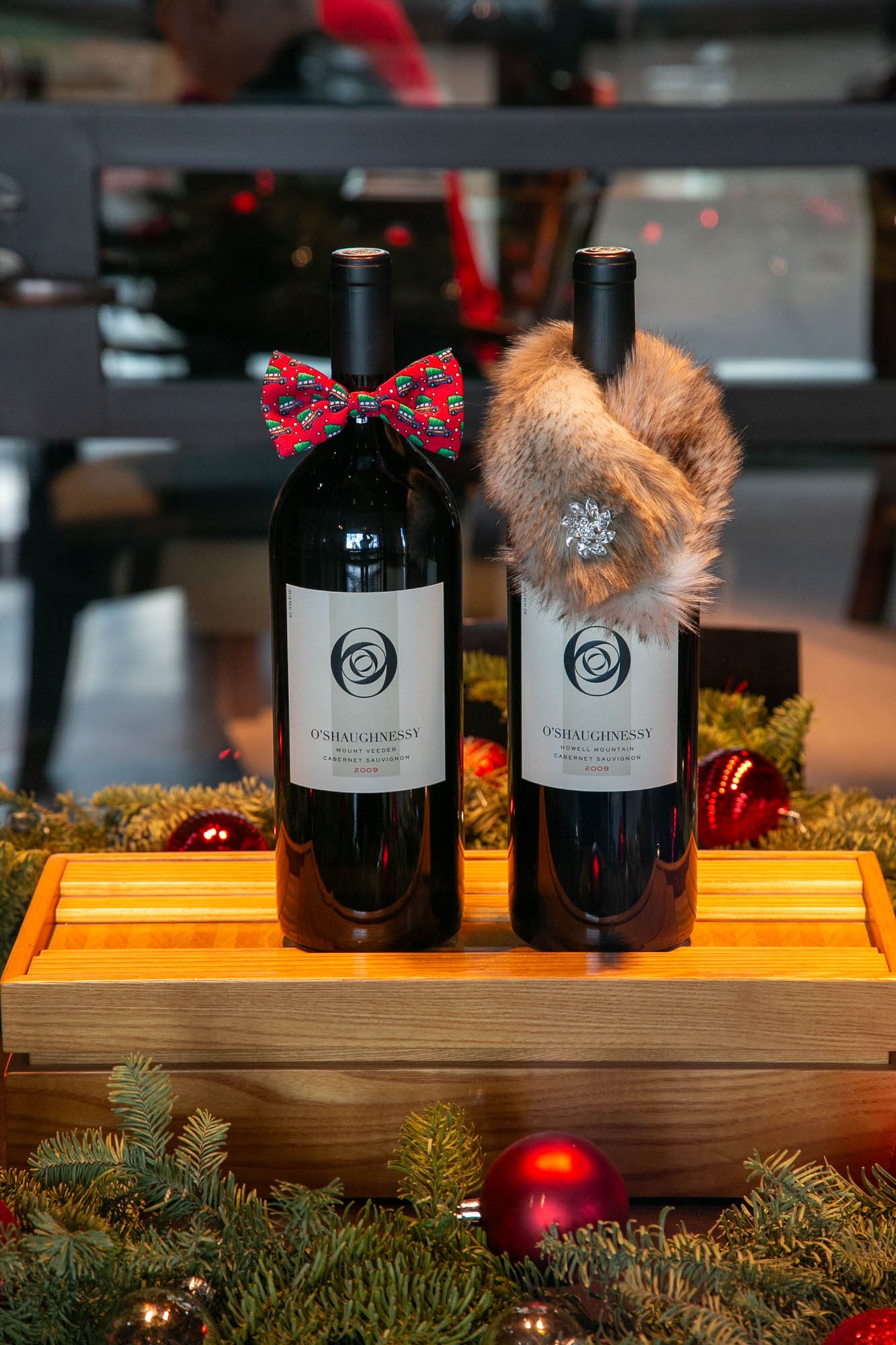
With Christmas day, lovingly celebrated with family, in the rear view mirror, it was time for a quick visit to Napa Valley. This is a time of the year that is relatively quiet in the valley with many wineries closed for a break until after the New Year. I needed to pick up some wine at O’Shaughnessy Winery, so we headed up Howell Mountain. O’Shaughnessy is one of my favorite wineries on Howell Mountain, and Howell Mountain itself is a specific appellation and one of the AVAs of the valley.
More about O’Shaughnessy in a minute, but let’s talk about the terms “AVA” and “appellation.” AVA stands for an American Viticultural Area. Specifically, an AVA is an officially recognized appellation; and an appellation is defined as a “geographically based growing region that shows unique characteristics of soil, climate, historical relevance and more.” Throughout Napa Valley, there are several AVAs, and Howell Mountain is one. An AVA’s distinctions influence the grapes and, ultimately, the wine. What distinguishes Howell Mountain is a climate that is slightly warmer and drier overall due to strong afternoon sun influence. The elevation ranges from 600 feet to 2600 feet, and the principal varieties grown are Cabernet Sauvignon, Merlot, Zinfandel and Cabernet Franc. It’s a short 20-minute drive up Deer Park Road (from Silverado Trail) to Howell Mountain.
Happy Holidays!
Happy holidays to everyone! This is such a great time of year to enjoy spending time with family, friends, and loved ones. It’s also a great time to enjoy wonderful food and interesting wine.
If you like, hit “reply” below and share with everyone what wine you’re enjoying this holiday season.
Call Me a “Cab”!!!
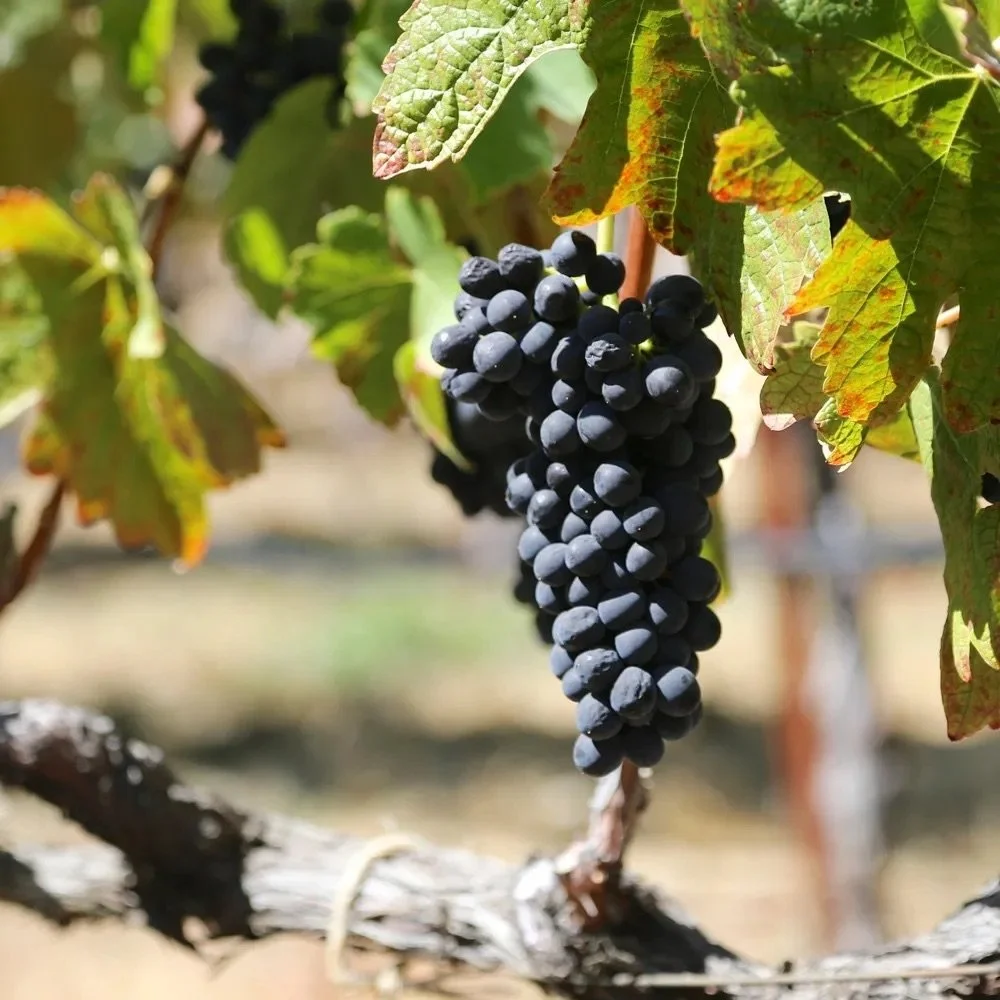
Cabernet Sauvignon has been referred to as the King of red wine grapes and the varietal of preference for many. Cabernet Sauvignon and blends where the Cabernet Sauvignon grape predominates are some of the most prized wines produced in California. Cabernet Sauvignon (often referred to as “cab” or “cabernet”) is dry, full flavored, and made to be long-lived. The aging potential can be 10-20 years or more. Yet, do you know where the varietal comes from? Interestingly, it is a relatively new varietal – the product of a crossing between Cabernet franc and Sauvignon blanc during the 17th century in France. Since that time, Cabernet has traveled all around the world and is the dominant grape grown in Napa Valley.
Let’s talk about what it is that has that beautiful, full-bodied wine be designated a Cabernet. In order for a wine to be called a Cabernet, 75% must come from Cabernet Sauvignon grapes. The wine maker may then blend in other grape varieties to produce the best possible outcome. Depending on the vintage and the yield (plus many other factors), he or she may add Merlot, Cab franc, Syrah, Mouvedre, or other grapes to round out the flavor profile. The 75% rule is true for all wines in the United States: In order to be called a specific variety, 75% must come from that variety. If it’s less than 75%, the wine needs to be called a blend.
A Word about Ratings
It seems today that everything is rated, in one way or another: movies, restaurants, Olympic dives, and so on. Wines are rated as well, and it can be confusing. You may wander through the store and see ratings by Wine Enthusiast, Wine Advocate, and/or Wine Spectator. Or maybe you’ll see Wilford Fong or Gold Medal Winner. The list seems almost limitless.
The first question to ask is why? What do the ratings matter? I like what I like, right? Well, yes and no. Wine is an artful expression of fruit that has been transformed into a delightful beverage that we enjoy. It is also a balance of fruit, alcohol, and tannins (if we’re talking about red wine). (Tannins are found in the skins and seeds of grapes, and their presence gives you the feeling of dryness in your mouth.) If there’s too much of one, the wine will not be pleasurable. If there’s too much alcohol, the wine will feel hot and overpowering. If there’s too much fruit, without the alcohol and tannins, the wine will be flat or flabby. If the tannins aren’t fully ripe, the wine will be harsh and almost astringent.
So what does this have to do with ratings? Well, that is the value, in my opinion, of the ratings. Ratings give you confidence that you’re buying a well-crafted wine, one that most likely has a good balance of fruit, alcohol, and tannins. The first step to enjoying wine is to have a well-structured, well-balanced wine.
A “FEW” Things about Exploring Your Wine
This week, let’s talk more about how to explore what’s in your glass. After all, isn’t that what it’s all about?
There’s more in the glass than just fruit. While the prime component is grapes, part of the fascination of wine is discovering what other aromas, flavors, and nuances are expressed in the wine. Different varietals have characteristic flavors and aromas – yet not always. There are many factors that affect the flavors and aromas that are represented in the glass, including water, sun, wind, soil type, and even plants that grow in the region. For example, Shiraz from Barossa Valley (in Australia) has a slight mint aroma that is brought out by the eucalyptus trees that are indigenous to the area. These are intriguing factors, and the fun is to discover what is there, to really explore.
Let me share a process that will assist you in becoming more aware of what’s in your glass. Practice and allow yourself to discover along the way. Don’t feel any pressure to “get it right.”